
Multi-Agent AI Enterprise Intelligence: Powering the Next Generation of Enterprise Systems

Enterprises today are operating in an environment defined by complexity, scale, and speed. Traditional automation and single-model AI approaches, while effective in specific use cases, are increasingly insufficient to manage interconnected systems, real-time decision demands, and continuous change. This is where Multi-Agent AI Enterprise Intelligence emerges as a transformative foundation for next-generation enterprise systems.
By enabling multiple intelligent agents to collaborate, reason, and act autonomously across enterprise workflows, multi-agent AI moves organizations beyond automation toward true operational intelligence.
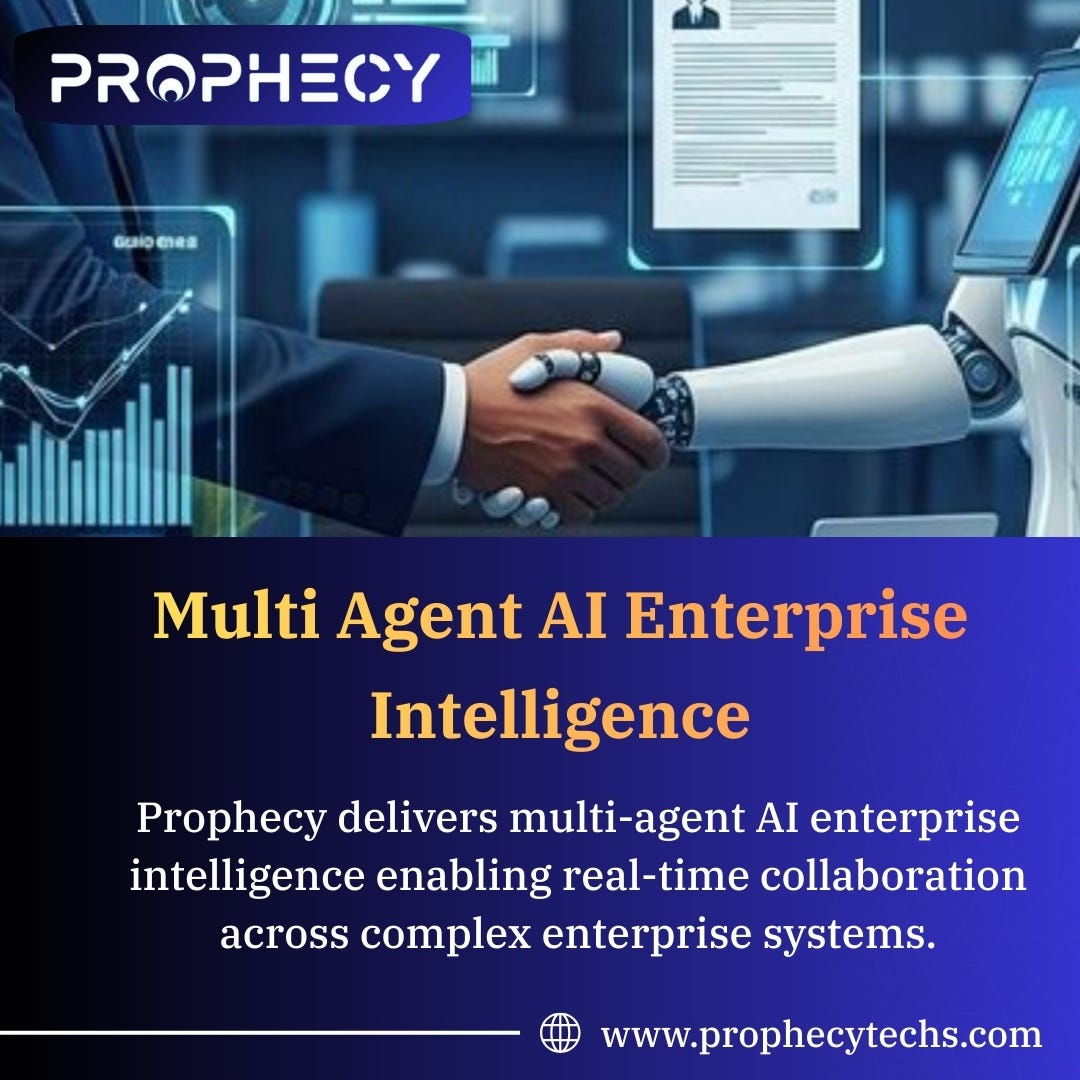
Understanding Multi-Agent AI Enterprise Intelligence
Multi-agent AI refers to a system where multiple autonomous AI agents operate independently yet collaboratively toward shared business objectives. Each agent is designed with specialized responsibilities—such as data analysis, decision optimization, process execution, monitoring, or exception handling—while collectively contributing to enterprise-wide intelligence.
Unlike monolithic AI models, multi-agent systems reflect how enterprises actually function: distributed teams, interconnected processes, and dynamic decision environments. This architectural alignment makes multi-agent AI particularly powerful for enterprise-scale adoption.
Why Traditional Enterprise Systems Are Reaching Their Limits
Legacy enterprise platforms were built on rigid rules, centralized workflows, and static decision logic. Even modern AI-enabled systems often rely on single-agent or model-centric designs, which face limitations such as:
Inability to adapt dynamically to real-time changes
Bottlenecks caused by centralized decision-making
Limited scalability across complex systems
High dependency on manual intervention for exceptions
As enterprises digitize further, they require systems that can sense, decide, and act continuously—without constant human oversight. Multi-agent AI directly addresses these challenges.
How Multi-Agent AI Powers Next-Generation Enterprise Systems
1. Distributed Intelligence at Scale
Multi-agent AI introduces intelligence at multiple layers of the enterprise—applications, data pipelines, workflows, and infrastructure. Instead of routing all decisions through a single engine, agents make localized decisions while aligning with global enterprise goals.
This enables:
Faster response times
Reduced system latency
Scalable intelligence across departments and regions
2. Autonomous and Adaptive Decision-Making
Each AI agent operates autonomously within defined governance boundaries. Agents continuously learn from outcomes, environmental changes, and peer agents, allowing enterprise systems to adapt in real time.
This adaptability is critical for:
Dynamic supply chains
Real-time customer engagement
Intelligent IT and service management
Predictive operations and risk mitigation
3. Intelligent Orchestration Across Enterprise Workflows
Multi-agent AI excels at orchestrating complex workflows that span multiple systems and functions. Agents coordinate actions across ERP, CRM, data platforms, cloud infrastructure, and third-party tools—ensuring seamless execution without rigid dependencies.
The result is:
End-to-end process intelligence
Reduced operational silos
Improved workflow resilience
4. Resilience Through Collaborative Intelligence
When one agent encounters uncertainty or failure, others can compensate, escalate, or adapt the process flow. This collaborative intelligence enhances enterprise resilience and reduces system downtime.
In contrast to brittle rule-based automation, multi-agent systems are inherently fault-tolerant and self-correcting.
Key Enterprise Use Cases
Intelligent Operations Management
AI agents monitor performance metrics, detect anomalies, predict issues, and trigger corrective actions autonomously—minimizing disruptions and improving efficiency.
Customer Experience Optimization
Multiple agents analyze customer behavior, intent, and sentiment across touchpoints to deliver personalized, real-time experiences.
Data & Analytics Intelligence
Agents manage data ingestion, quality validation, transformation, and insight generation—enabling trusted, real-time analytics at scale.
IT & Service Automation
Multi-agent AI drives intelligent incident resolution, root-cause analysis, and service optimization across complex IT environments.
Governance, Trust, and Enterprise Control
One of the most important aspects of enterprise AI adoption is governance. Multi-agent AI systems are designed with built-in guardrails to ensure:
Policy-based decision boundaries
Role-based access and accountability
Auditability of agent actions
Alignment with compliance requirements
This balance of autonomy and control makes multi-agent AI suitable for regulated and mission-critical enterprise environments.
The Strategic Role of Platforms Like Prophecy
Modern enterprises require platforms that can operationalize multi-agent AI without excessive complexity. Prophecy enables enterprises to design, deploy, and manage intelligent agent ecosystems that integrate seamlessly with existing enterprise architectures.
By combining AI orchestration, data intelligence, and workflow automation, Prophecy helps organizations transition from fragmented automation to cohesive enterprise intelligence—turning AI into a core operational capability rather than an experimental layer.
What the Future Holds
Multi-agent AI represents a shift from systems that support decision-making to systems that participate in decision-making. As enterprises continue to evolve, we will see:
AI-native enterprise platforms
Self-optimizing business processes
Continuous decision intelligence
Human-AI collaboration at scale
Organizations that adopt multi-agent AI early will gain a competitive advantage through agility, resilience, and smarter execution.
Conclusion
Multi-Agent AI Enterprise Intelligence is not just a technological evolution—it is a strategic imperative for enterprises navigating complexity and scale. By enabling autonomous collaboration, real-time adaptability, and intelligent orchestration, multi-agent AI powers the next generation of enterprise systems.
With the right platform and governance model, enterprises can unlock unprecedented efficiency, innovation, and business impact—transforming AI from a tool into an enterprise-wide intelligence layer.